Electrical panels
Designing and manufacturing high-quality electrical panels.
ITI Electra specializes in the design and manufacturing of high-quality electrical panels, providing robust solutions for both industrial process control and power distribution.
Our engineering expertise ensures that every panel is built to the highest standards of safety, reliability, and performance.
-
Control panels: We design and build custom control panels that provide precise command over your industrial processes, tailored to your specific operational requirements.
-
Distribution panels: We manufacture electrical distribution panels designed for the safe and efficient management of power in industrial and commercial environments.
Services & products
Electrical Control Panels for Motors (Pumps, Fans)
We manufacture panels with the following drive and motor starting methods:
- Direct On-Line (DOL)
- Star-Delta
- Soft Starter
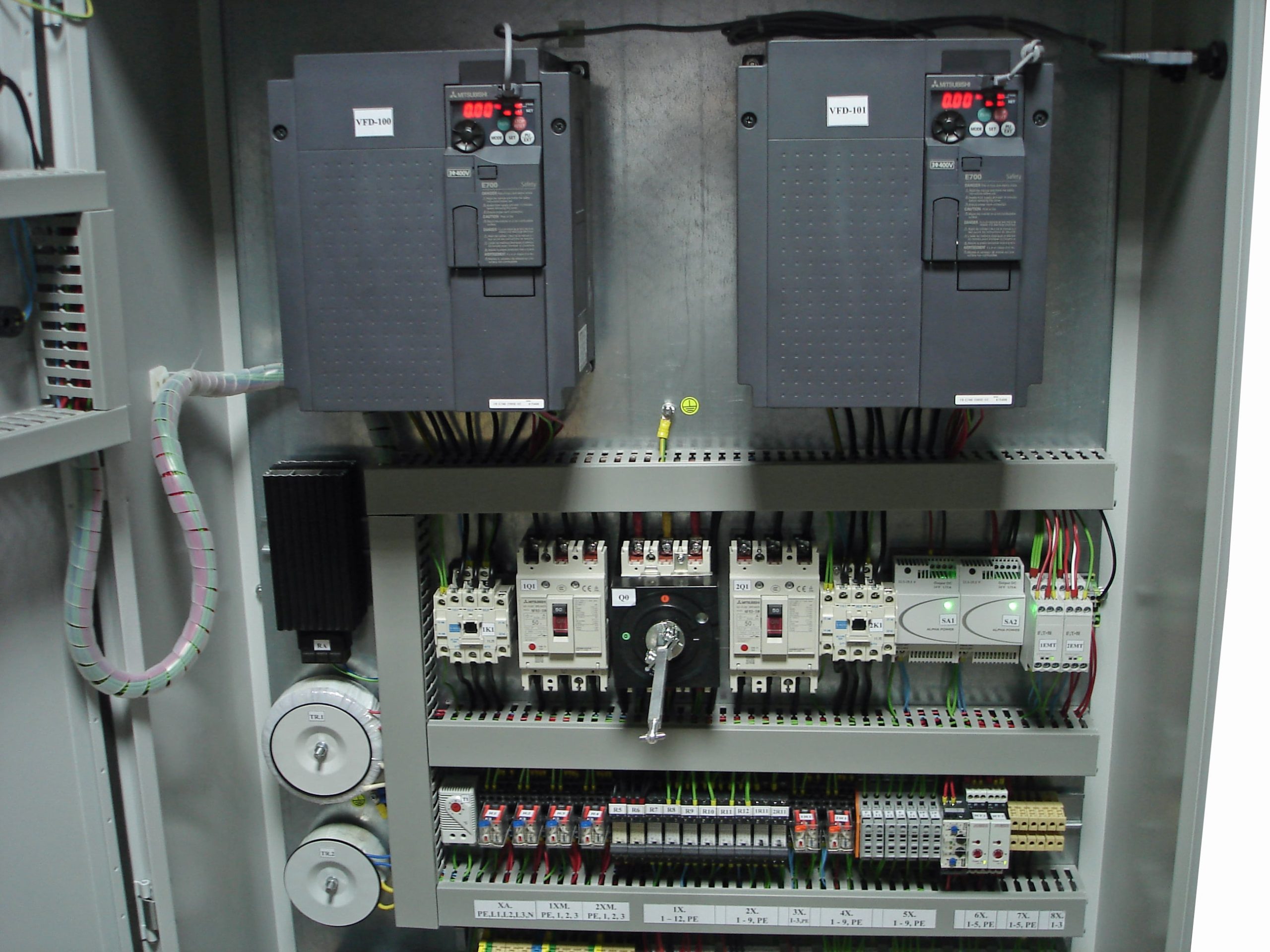
- Variable Frequency Drive (VFD)
Types of Electrical Panels We Produce:
- Automation and Control Panels
- Monitoring Panels
- Electrical Distribution Panels
- Electrical Panels for Residential Consumers
- Custom Electrical Panels built according to the client’s own design specifications
Application Fields for Our Projects:
- Agriculture: Pumping / Irrigation
- Milling
- Baking / Panification
- Fish Farming / Pisciculture
- Greenhouses
- Silos
Project Examples:
- Command and Automation Panel for a 200kW / 500V AC electric pump.
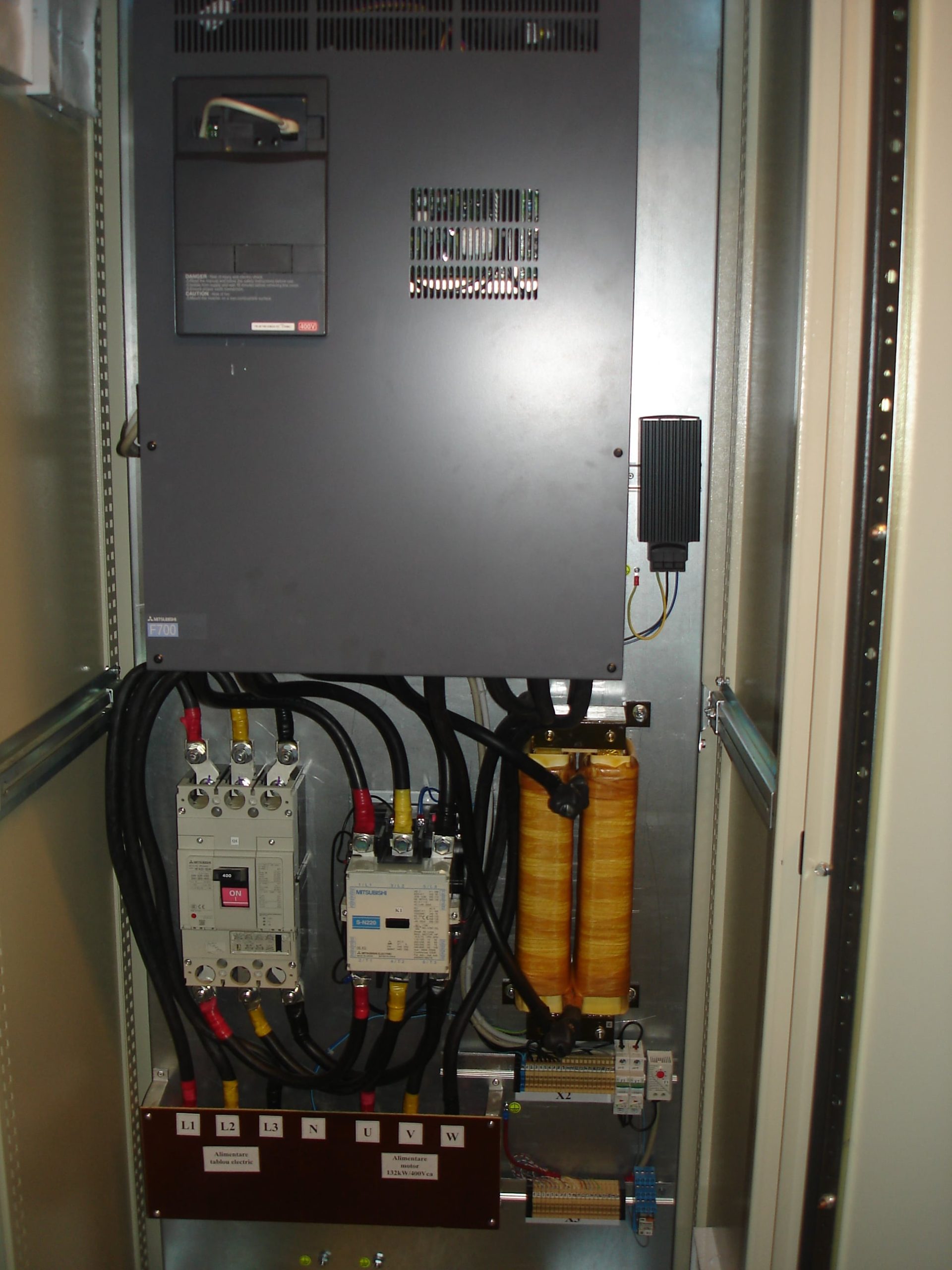
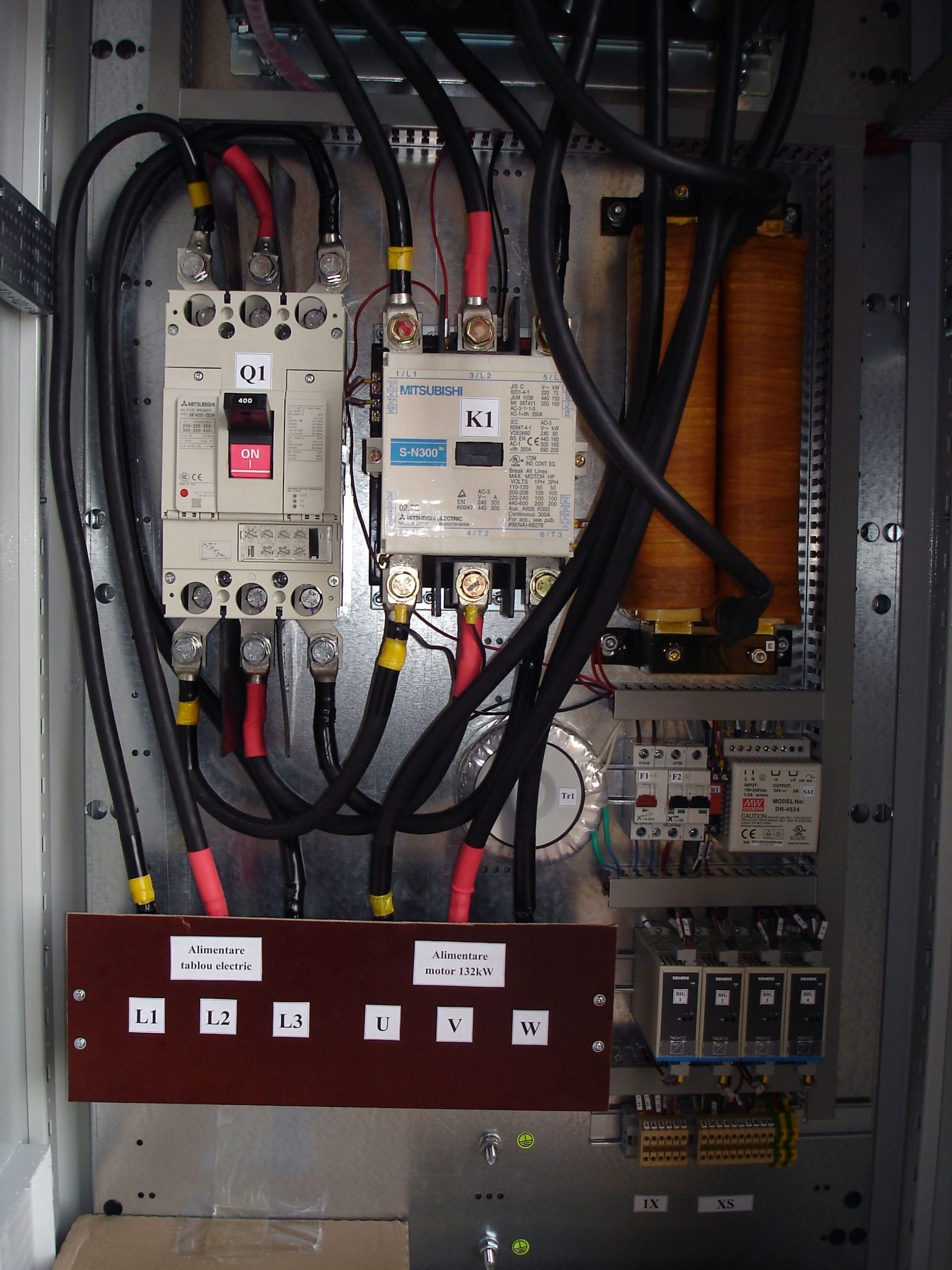
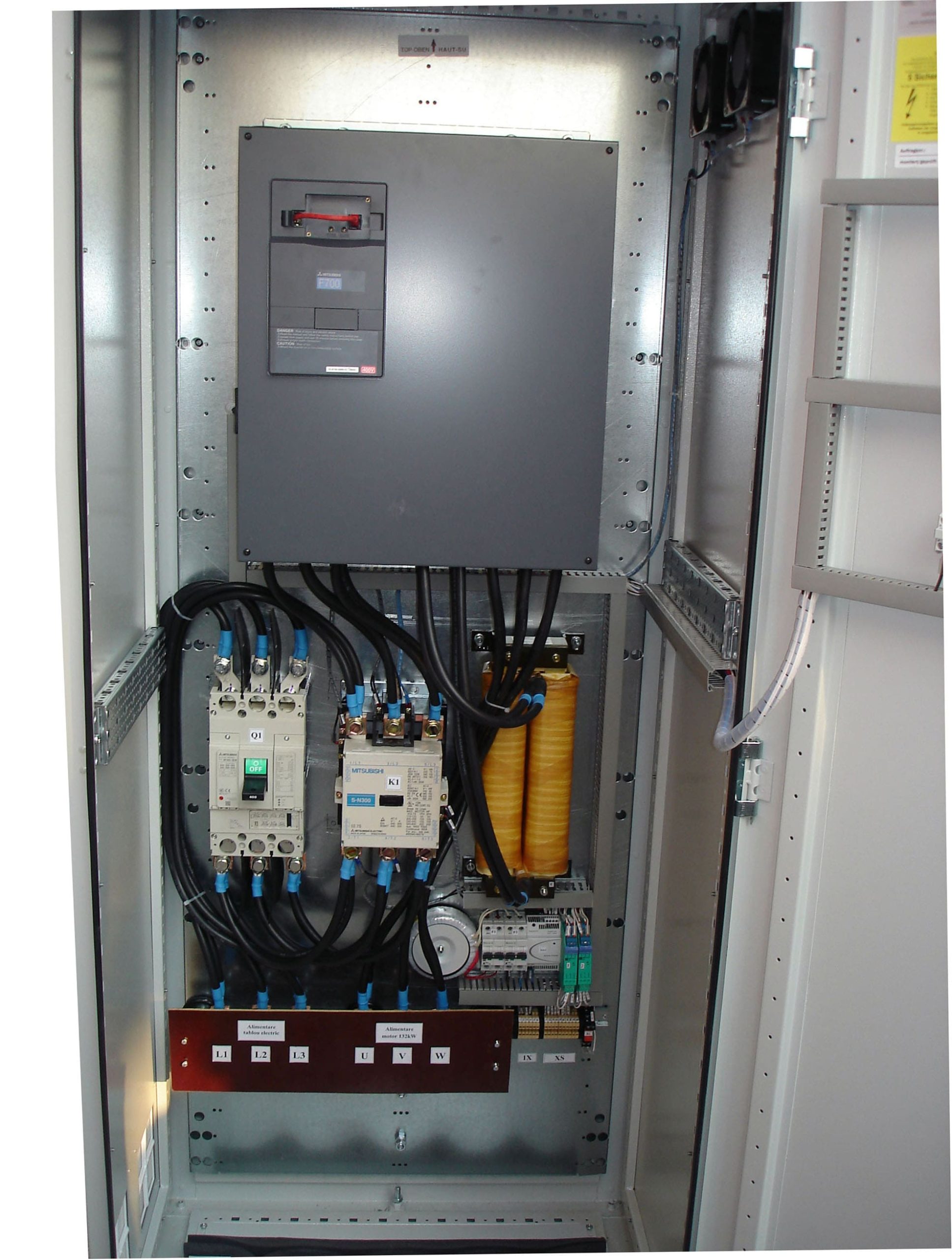
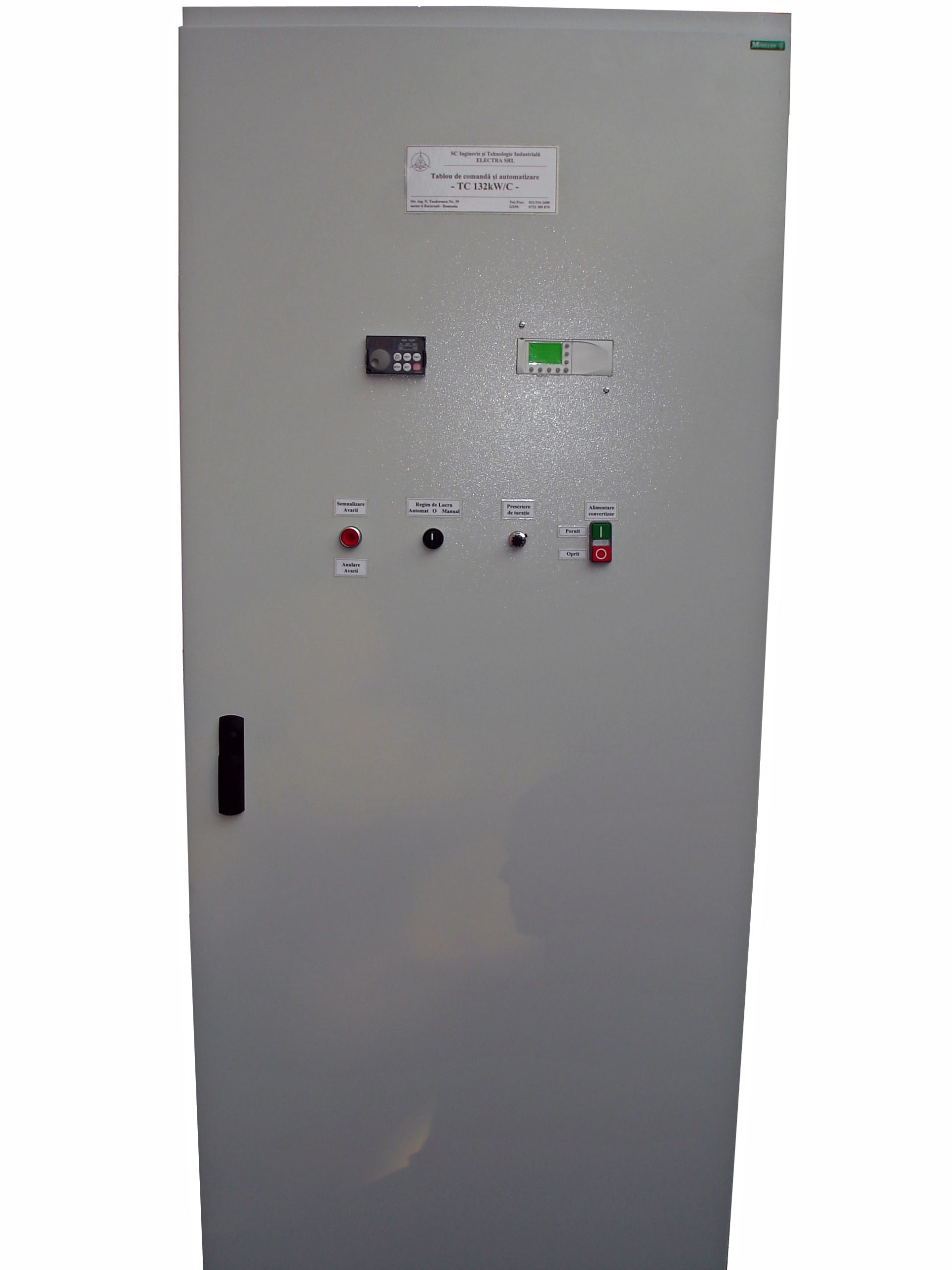
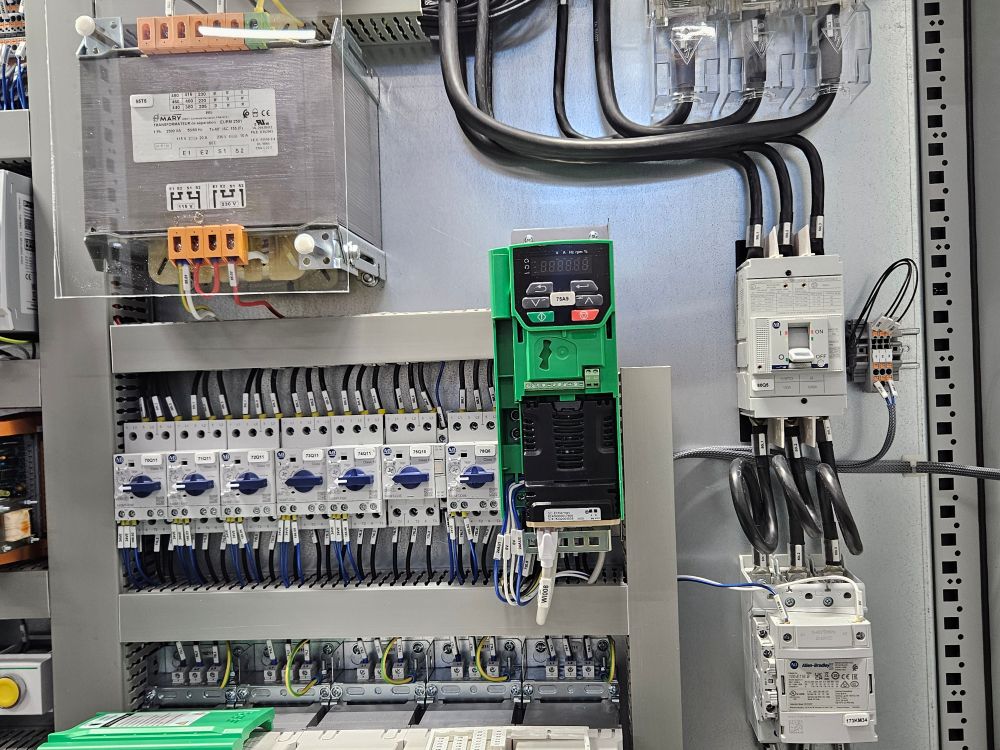
- Command and Automation Panel with a Variable Frequency Drive (VFD) for a 132kW / 380V AC electric pump.
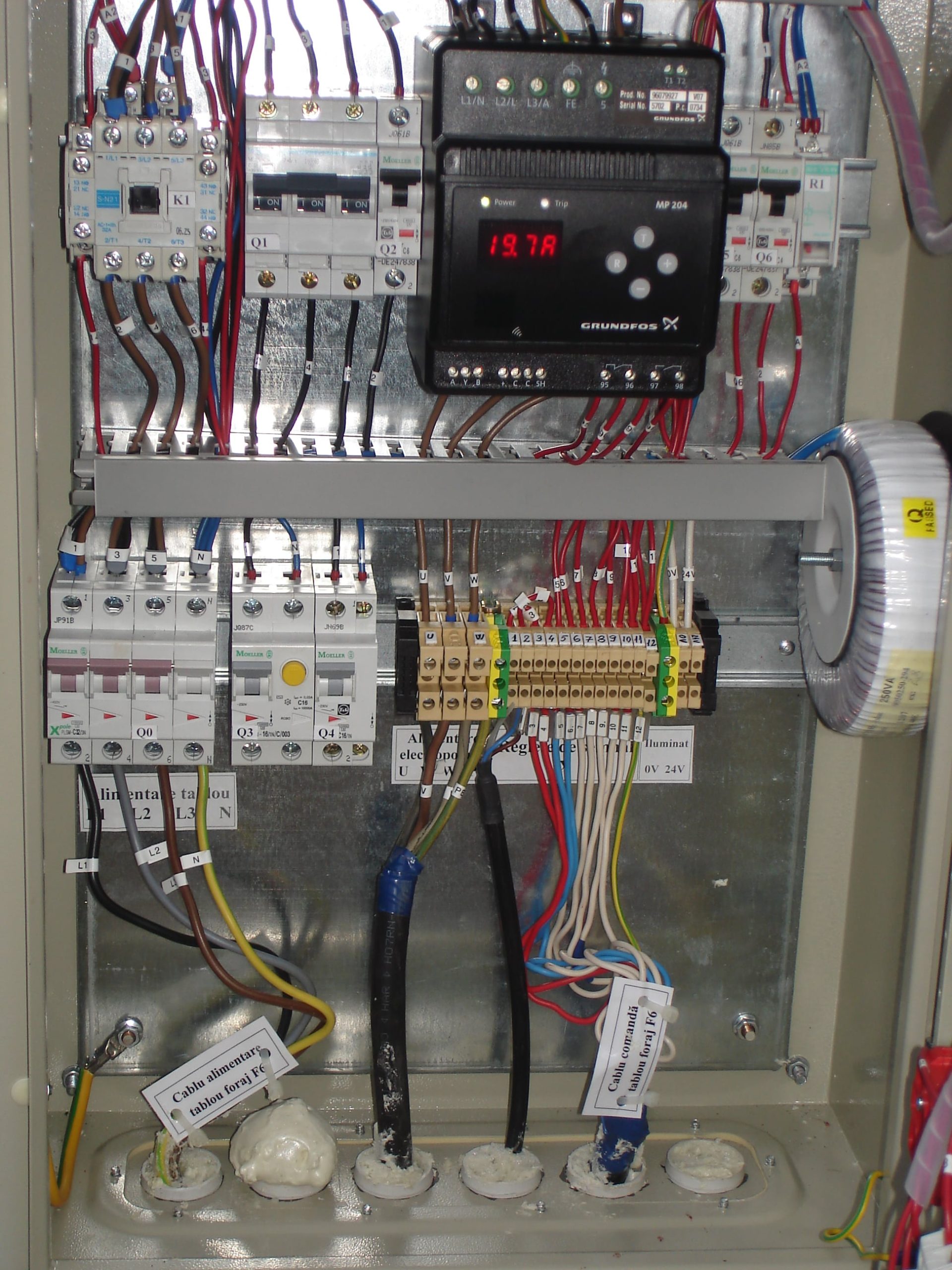
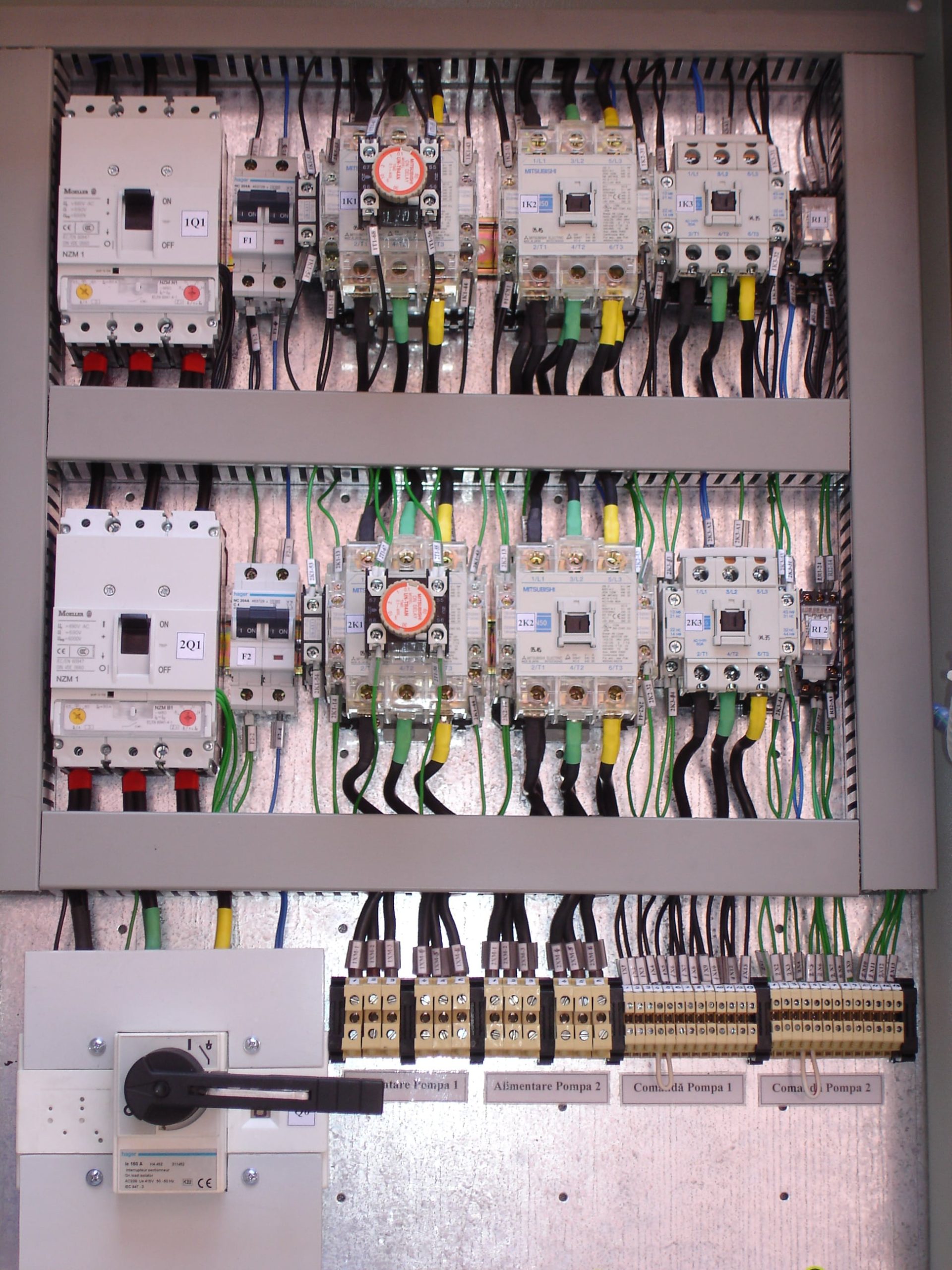
- Electrical Panel for driving secondary condensate pumps (2x37kW).
- Control Panel for fans driven by soft starters (2×18.5kW).
Case Study: Control Panel for a High-Power Injection Pump
Project: Command and Automation Control Panel for a 200kW / 500V AC Electric Pump.
Client: Petrom Timisoara
Project Specifications: The system provides the protection, control, and operation for a 200kW pump used for water injection into oil deposits, supporting both automatic and manual operating modes. The manual mode functionality is implemented independently of the system’s Programmable Logic Controller (PLC). In automatic mode, pressure regulation is achieved using a Variable Frequency Drive (VFD). In manual mode, speed control is performed via a potentiometer mounted on the control desk.
Equipment Deployed:
- Variable Frequency Drive (VFD): Ensures precise pressure regulation through speed control.
- Programmable Logic Controller (PLC): Manages all pump protection logic in both automatic and manual operating modes.
- Switchgear and Protection Apparatus: For the main motor circuit.
- Transducers: For monitoring suction pressure, discharge pressure, and two vibration points. The signals from these transducers are integrated into the pump’s protection logic.
Command and Control Functions (Automatic Mode):
- Maintaining the pressure in the discharge circuit at the prescribed setpoint.
- Automatic pump restart functionality.
- Supervision of all pump protection conditions.
- Time-based filtering of start and stop conditions.
- Logging of operational runtime.
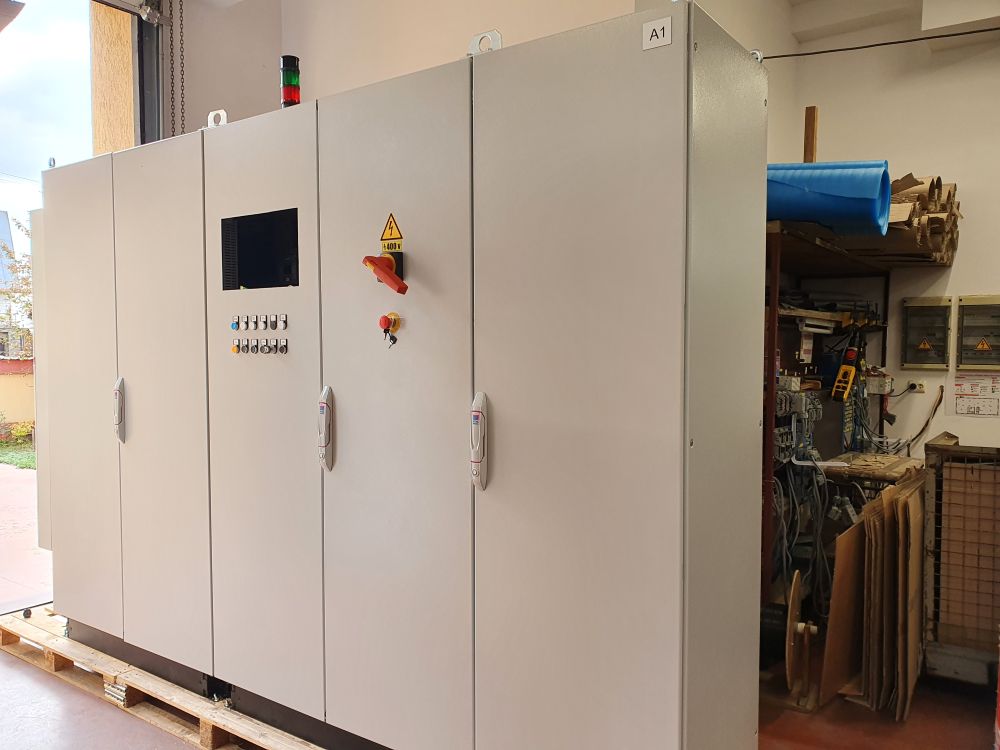
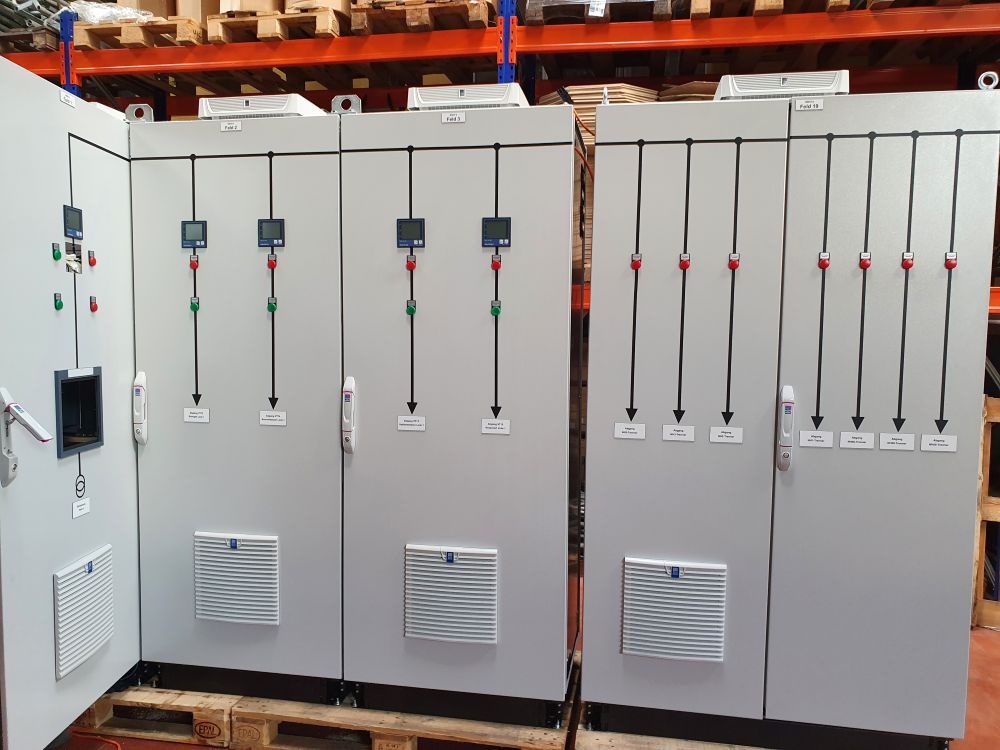
These panels are designed for the transfer and distribution of electrical energy from medium/low voltage transformer stations to secondary electrical panels, encapsulated busbar systems, or directly to the powered installations.
They are built with a robust construction in metal enclosures, available as TTA (Type-Tested Assembly) or non-TTA systems, with a degree of protection (IP rating) adapted to the specific installation environment.
As per the design, these panels provide power distribution up to 4000 A with protections against:
- Short-circuit
- Overload
- Differential current (earth leakage)
- Overvoltage
They can be equipped with advanced systems for:
- Automatic Transfer Switching (ATS) between power sources.
- Command and control of electrical generators.
- Automatic load shedding.
Depending on the project requirements, these panels are outfitted with units for measuring electrical parameters (voltage, current, power, energy), with the capability for metering energy consumption on the distribution busbars. This includes the possibility of integration into a centralized energy dispatch and management system.
They can also integrate complex systems for monitoring and controlling the status of the protective circuit breakers.
Reference projects
Explore our work to see how we transformed complex challenges into engineering success.
Media gallery and examples